You know that tangled nest of wires behind your TV? Now, imagine that same chaos scaled up for a hospital, where thousands of cables for power, data, and life-support systems must run flawlessly. A single damaged wire isn’t just an inconvenience—it could be a critical safety risk.
The solution is often hiding in plain sight. Next time you’re in a big-box store or parking garage, look up. You’ll likely see metal troughs or ladders running along the ceiling, acting as a dedicated superhighway for all those cables. This organized network is called a cable tray system.
But these trays, loaded with hundreds of pounds of wire, don’t just float. They rely on an unsung hero: the hanger. These simple-sounding devices, the Kabelrinne hangers, are the critical connection that securely anchors the entire system to the building. Since not all loads are the same, and not all hangers are created equal, choosing the right cable tray hangers is the most important step in creating a safe and reliable cable tray support system.
What Are Those Metal Baskets in the Ceiling?
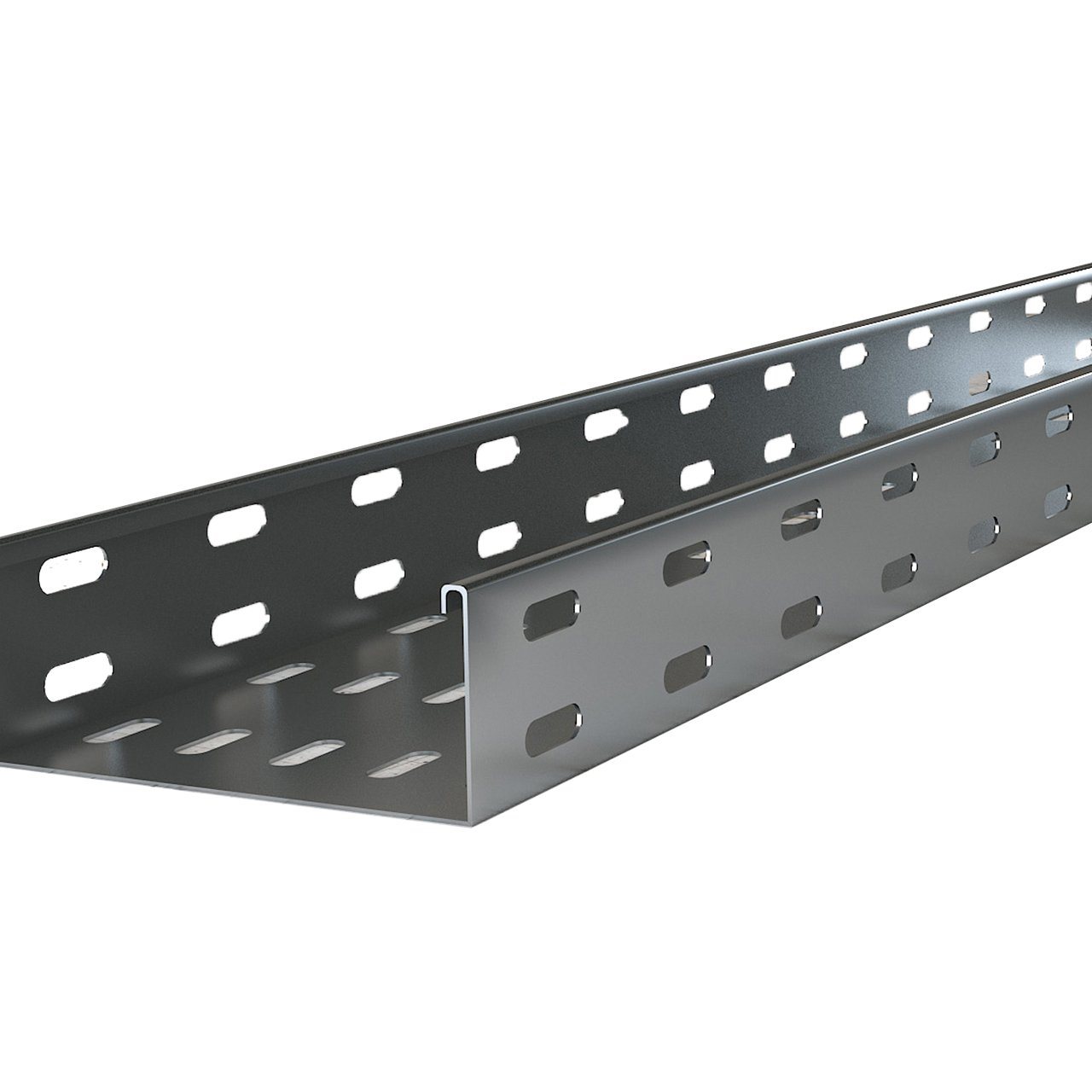
Ever notice those metal ladders or wire mesh baskets running along the high ceilings of a supermarket, airport, or modern office? Those are Kabelrinnen, and they function like a dedicated highway system built just for the hundreds of electrical and data wires that power our world. They create a clean, open path for cables to travel from one end of a building to the other.
Instead of a chaotic, tangled mess of wires hidden behind walls, a cable tray organizes everything into a single, accessible bundle. This system has two main jobs: to support the weight of all those heavy cables and to protect them from damage. By keeping critical wiring neat and contained, it makes finding and fixing a problem much easier for technicians and helps prevent a simple trip-up from becoming a major outage.
So, the next time you’re in a large store with an open ceiling, look up. You’ll be able to spot these workhorses everywhere, from solid metal troughs to the more common wire mesh tray designs.

How Do These Wire Highways Defy Gravity?
A cable tray loaded with thick copper wiring can be incredibly heavy—far too heavy to simply be attached to a ceiling with a few screws. Just like a bridge needs support columns, these wire highways need a dedicated structure to keep them safely suspended. This is where cable tray hangers come in, forming the essential link between the tray and the building itself.
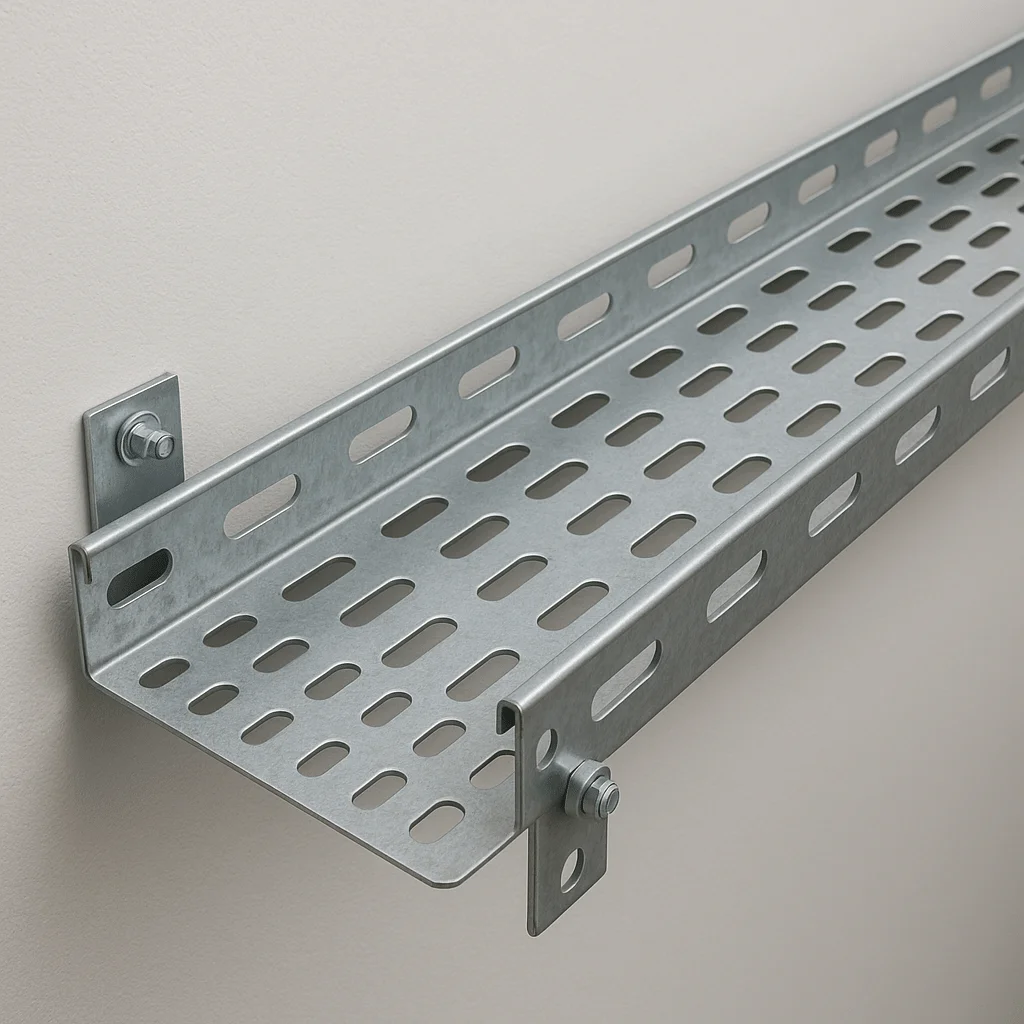
Think about putting up a heavy bookshelf on your wall. You wouldn’t use tape; you’d use strong metal brackets to transfer the weight to the sturdy studs inside the wall. A cable tray hanger is the exact same idea on an industrial scale. It’s a purpose-built bracket or support designed to grip the tray and securely fasten it to a load-bearing part of the building, like a steel beam or concrete slab.
These Kabelrinnenhalterung systems are remarkably versatile. Hangers can bolt a tray to a wall, suspend it from threaded rods that create adjustable ceiling hung supports, or even anchor it beneath a raised floor in a data center. No matter the location, the hanger’s fundamental job remains the same: to safely bear the load.
Why Isn’t There Just One Type of Hanger?
Thinking one hanger could do every job is like thinking a single type of screw can build an entire house. The weight and location of cable trays vary dramatically, so the supports must vary, too. A handful of lightweight internet cables doesn’t need the same support as a massive bundle of industrial power lines, which can weigh as much as a person every few feet.
The location also dictates the hanger type. In a narrow hallway, it often makes sense to use simple wall-mounted cable tray brackets. But in a massive warehouse or an open-ceiling supermarket where walls are far away, the only option is to hang trays from above, sometimes dozens of feet down from the structural ceiling.
This leads to different designs for different challenges. For lighter loads hanging from a ceiling, a center rod support system—where the tray is balanced on a single threaded rod—is often enough. For the heaviest jobs, installers use a design that works like a swing or a trapeze. This heavy-duty trapeze support uses two rods to cradle the tray from both sides, providing maximum stability and strength.
Why Does the Spacing Between Hangers Matter?
The distance between each hanger is one of the most critical factors in a safe installation. If the supports are placed too far apart, the weight of the tray and the cables inside will cause it to sag in the middle. This sagging isn’t just a cosmetic problem; it creates a dangerous weak point.
The dip puts constant stress on the tray and the cables themselves, which can lead to damage over time. In a worst-case scenario, a severely sagging section could buckle under the load, potentially pulling the hangers from the ceiling and bringing everything crashing down. It’s a risk no one is willing to take in a public space or a busy workplace.
For this reason, the distance between hangers is never a guess. Installers follow precise guidelines from the manufacturer that are based on the type of tray, the strength of the hangers, and—most importantly—the total weight of the cables it will eventually carry. A heavier load always means the supports must be closer together.
Are There Special Hangers for Tough Situations?
Absolutely. In places prone to earthquakes, for instance, a standard hanger isn’t enough. The entire system needs to handle intense shaking. To meet these seismic bracing requirements, engineers use special hangers and additional supports that allow the Kabelrinne to sway with the building during a tremor, rather than fighting against it and snapping.
Moisture presents a completely different kind of threat. In damp basements, outdoor facilities, or coastal areas where salty air is a factor, plain steel would quickly rust and lose its strength. That’s why many hangers are made from naturally corrosion-resistant materials like stainless steel or are covered in a thick, protective coating, similar to how outdoor furniture is treated to survive the elements.
From withstanding tremors to resisting rust, these advanced supports are designed for one ultimate goal: reliability. They ensure that the vital cables carrying power and data aren’t the first thing to fail in an emergency. This attention to detail turns a simple hanger into a crucial component for keeping our world running.

The Unsung Heroes Holding Our Connected World Together
What was once part of the background noise of a busy building is now an understandable system. The metal ladders and troughs running overhead are deliberate highways for the data and electricity we depend on, and their organization is a foundation of public safety. These Kabelrinne support systems prevent heavy bundles of wire from becoming a falling hazard and keep our electrical infrastructure accessible and maintainable.
From the lights in the grocery store to the Wi-Fi at the airport, the services you rely on depend on this stability. So, the next time you’re in a shopping mall, office, or airport, look up. You’ll be able to spot these hidden highways and the unsung hangers holding them in place, appreciating the silent work they do to keep our world connected.