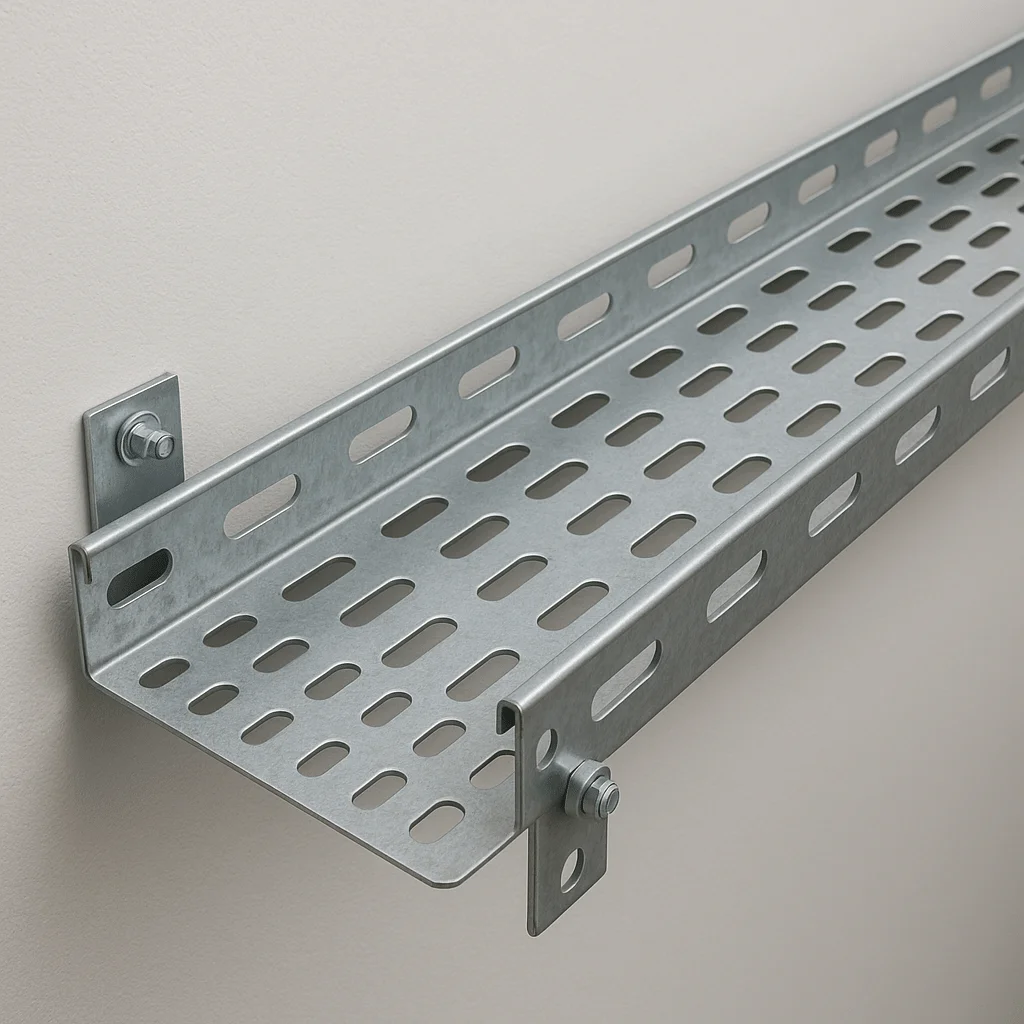
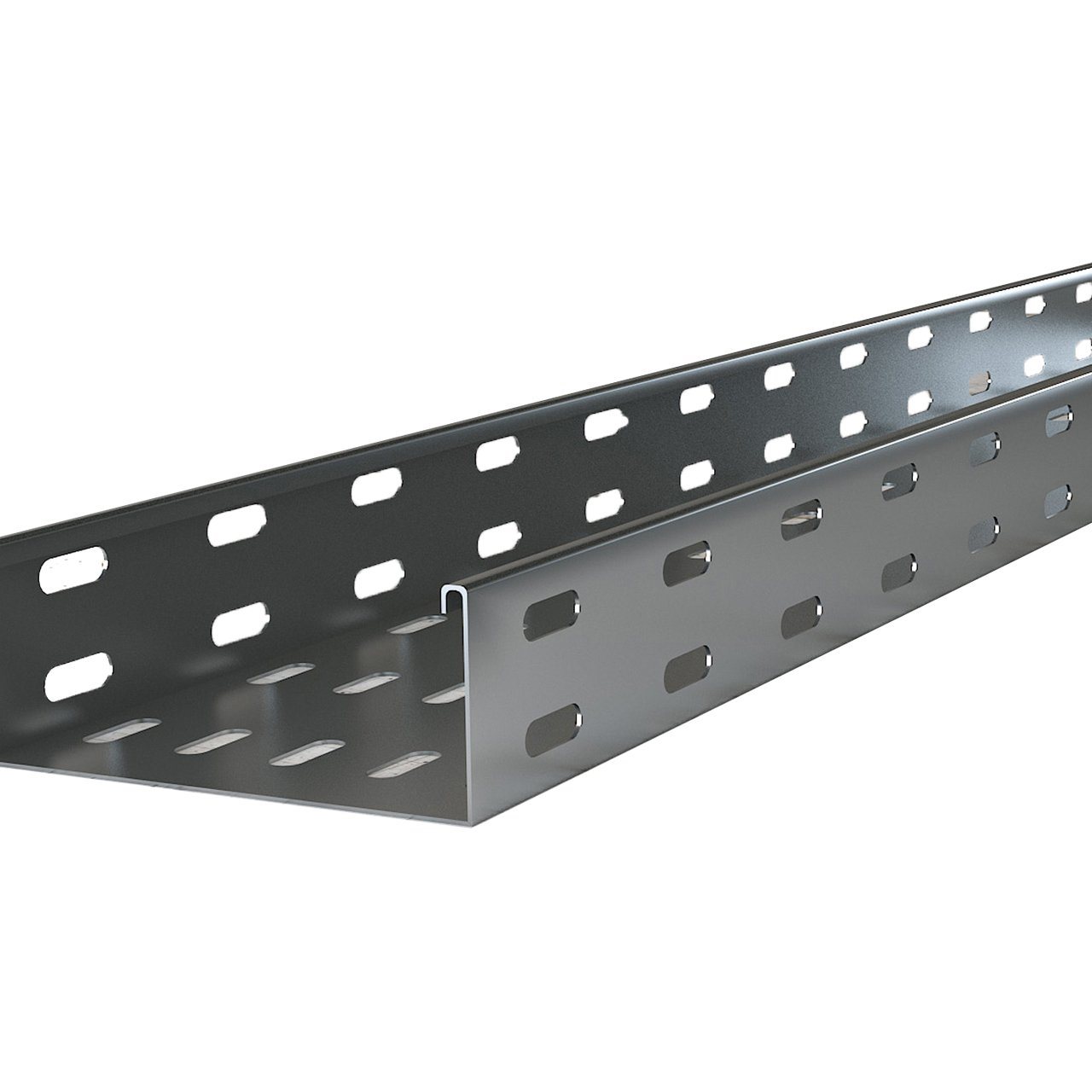
So, why choose an outdoor cable tray instead of simply running wires through a standard pipe, known as a conduit? While a sealed pipe provides solid cable protection from sun and rain, the real-world advantages of a tray become clear down the road. The decision is less about the initial installation and more about future-proofing your entire electrical system.
Imagine your workshop is powered and running perfectly. Two years later, you buy a powerful new tool that needs its own dedicated circuit. With a cable tray, an electrician can simply lay in the new cable in minutes. With a sealed conduit, however, that same task might require pulling all the existing wires out just to add one more—or worse, the pipe could be full, forcing the costly installation of an entirely new run.
When you’re considering conduit alternatives, the choice often comes down to these practical differences:
Cable Tray vs. A Simple Pipe (Conduit)
- Flexibility: Easily add, remove, or inspect cables. A sealed pipe makes future changes difficult and time-consuming.
- Capacity: Holds many cables in one neat channel. You would often need multiple pipes to accomplish the same job.
- Cooling: The open design lets heat escape. In practice, a pipe traps heat, which can reduce a cable’s performance and shorten its lifespan.
Ultimately, a tray is a more flexible approach to outdoor cable management. By providing a single, organized channel that keeps cables cool and completely accessible, it delivers a professional-grade solution that’s built to adapt to your future needs, not just your current ones.
Choosing the Right Armor: Steel, Fiberglass, or Aluminum for Your Project
Just as important as the tray itself is the material it’s made from. Think of this choice as selecting the right armor for the job—you need something that can withstand the specific environmental challenges it will face for years to come. For outdoor projects, the primary battle is against moisture, salt, and chemicals that lead to rust and corrosion. Choosing the right material is the key to creating a truly durable and long-lasting installation.
For most situations, galvanized steel is the undisputed workhorse. This isn’t just plain steel; it’s coated in a protective layer of zinc that acts as a shield against rust. It’s incredibly strong, cost-effective, and provides more than enough protection for the vast majority of residential and light commercial projects. This balance of strength and defense makes it the default and often the best material for outdoor cable management.
However, some environments call for specialized corrosion resistant cable support systems. If your project is near the coast where salty air is a constant threat, aluminum is an excellent upgrade. It’s naturally rust-proof and much lighter than steel, making it the superior choice for marine environments. In the most extreme cases, such as around industrial chemicals or pool pump equipment, fiberglass cable trays offer the ultimate protection. Fiberglass is immune to rust and corrosion from most chemicals, ensuring maximum longevity where even steel or aluminum would fail.
With the material’s armor selected, the next step is to choose its shape. The design of the tray itself—whether it looks like a ladder or has a solid bottom—also plays a critical role in protecting your cables.
Ladder, Perforated, or Solid? Matching the Tray Type to Your Wires
With your tray’s material chosen, the final piece of the puzzle is its design. Cable trays, sometimes called a cable basket system, aren’t one-size-fits-all; their structure is tailored for specific jobs. The three main styles you’ll encounter are ladder, perforated, and solid-bottom, and picking the right one depends entirely on the types of cables you need to protect.
The most common design is the ladder-type tray. As the name suggests, it looks just like a ladder with two side rails and rungs. This open design is its biggest advantage, allowing air to circulate freely and cool down large, heat-generating power cables. It’s the go-to choice for heavy-duty applications, from solar farm cable management to running the main power line to a workshop, as it prevents cables from overheating and losing efficiency.
Moving on, the perforated tray offers a middle ground. It features a ventilated bottom with holes, providing excellent air circulation while offering more support for smaller wires that might otherwise sag between a ladder tray’s rungs. The debate over perforated vs ladder rack for rooftop installations often comes down to this: ladder is best for a few big cables, while perforated excels at supporting many smaller data and power lines together.
Finally, for the ultimate in protection, there’s the solid-bottom tray. With a continuous, solid base, it creates a fully enclosed channel that shields sensitive cables—like fiber optic or data lines—from any falling debris, dust, or water drips. This makes it the perfect choice for running delicate wiring in areas where physical damage is a concern. But this added protection raises a new question for all tray types.

Do I Need a Cover? How Big Should It Be? Answering Your Top Questions
While a solid-bottom tray protects from below, what about from above? Deciding if you need a cover often comes down to one factor: the sun. Over time, sunlight’s UV rays can degrade cable insulation, making it brittle. For this reason, if your tray is in direct sun, a UV-resistant cover is a smart investment. It acts like a shield, not only blocking sunlight but also preventing the buildup of snow, ice, or falling debris from damaging the wires within. Think of it as an insurance policy for your electrical system.
When it comes to selecting the right size cable basket, the professional rule of thumb is to plan for the future. Calculate the space your current cables will occupy, then add at least 25% more room. This small step saves major headaches later, giving you the flexibility to easily add a new circuit for an outdoor outlet or future workshop without having to install a second tray. A little extra space up front is far more cost-effective than a complete do-over down the road.
Finally, a tray full of heavy cables needs to be rock-solid. Securing cables on an exterior wall isn’t a job for standard screws from the hardware store. The system must be attached with load-rated anchors and supports specifically designed to handle the combined weight of the tray and the cables, even under stress from wind or snow. This is one area where professional-grade hardware isn’t just recommended; it’s essential for a safe, long-lasting installation. The specific methods and safety checks involved go beyond the basics.
Beyond the Basics: What Professionals Check for Safety and Longevity
While strong anchors prevent a tray from pulling away from a wall, the tray itself must be able to handle the weight of the wires. This is known as its load capacity. Every tray is rated to hold a specific amount of weight before it starts to sag or bend, which could damage the cables or create a structural failure. Ensuring the load capacity of cable support channels is sufficient for all current and future cables isn’t just for looks; it’s a fundamental safety requirement to prevent a collapse.
Beyond structural integrity, there’s a crucial electrical consideration. Because these trays are often made of metal, a damaged wire could theoretically energize the entire structure, creating a serious shock hazard. To eliminate this risk, installers follow strict grounding requirements for metal raceways. A dedicated grounding wire is physically connected to the tray, providing a safe path for any stray electricity to travel to the earth and trip a circuit breaker. This simple connection turns a potential hazard into a safe, protected system.
Finally, how do you know a product is genuinely built to survive years of sun, rain, and snow? Professionals look for a NEMA rating. Think of this as an official report card that certifies an enclosure’s ability to withstand environmental conditions. A specific NEMA rating for external enclosures confirms the product is designed and tested for outdoor use, giving you confidence that it won’t rust prematurely or fail when faced with harsh weather. It’s a mark of quality that separates professional-grade equipment from the rest.

From Messy Wires to a Professional System: Is a Cable Tray Right for You?
What was once just industrial background noise—those metal ladders running along buildings and overpasses—is now a clear solution in your toolkit. You can now recognize a cable tray not as clutter, but as a strategic system designed for organization, protection, and future-proofing. This shift in perspective is the first step toward creating more robust and professional-grade projects.
This newfound knowledge empowers you to assess your own needs with confidence. If your project demands one of the better outdoor wiring solutions—one that can handle multiple cables, keep them safe from the elements, and give you the flexibility to add more later—you now have the language to explore your options. You understand the core cable management benefits that set this approach apart.
While knowing what to ask for is crucial, the single most important step for any electrical work is knowing who to ask. Your real power lies in making an informed decision. For a safe, compliant, and correctly installed system, your next and most critical action is hiring an electrician. They can translate your vision into a reality that is built to last.